Israel.
קומיקס
Israel
1931
קומיקס
Hebrew comics began in the 1930s in children's weeklies of the British Mandate, where Arie Navon drew Uri Muri with the poet Leah Goldberg in Davar's children's paper.
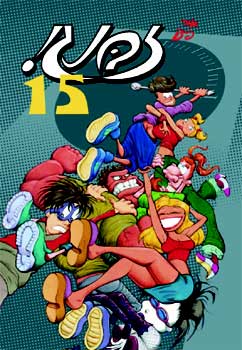
After decades of strips that taught Zionist values, cartoonists such as Dudu Geva and Ido Amin turned to satire in the 1970s, Uri Fink's Zbeng! won teenage readers from 1987, and the Actus Tragicus collective founded by Rutu Modan and Yirmi Pinkus in 1995 carried Israeli alternative comics abroad. Political cartooning, from Dosh's Srulik to Yaakov Kirschen's Dry Bones, ran alongside, and since 2007 the Israeli Cartoon Museum in Holon has exhibited the history of the field.
61
31
1931
2000s
Artists from Israel in the archive.
Comics from Israel in the archive.
Davar LeYeladim, the earliest comic from Israel in the archive.
The decade when the most new comics from Israel began.
קומיקס
Israel in 5 chapters
A short history you can leaf through. Click a page, use the arrow keys, or press Turn the page to read on.
Israel.
קומיקס
5 chapters
Chapter 1
1934
to 1949
Children's weeklies and the first Hebrew strips
1934
to 1949
Chapter 01
Children's weeklies and the first Hebrew strips
The first strips appeared in children's papers such as Davar LeYeladim and Mishmar LeYeladim. Arie Navon, the cartoonist of Davar, began Uri Muri in its children's supplement in 1934 and from 1937 worked on it with Leah Goldberg, pairing rhymed text with pictures. Panels and speech balloons came in later booklets such as The Scarecrow (1940).
1950
to 1969
Chapter 02
Dosh, Boki and American influence
Dosh drew Ruti, a strip about a strong young woman, for HaOlam HaZeh from 1950 to 1952, and his Srulik became a symbol of Israel in Maariv cartoons. American comics shaped later work: Asher Dickstein edited the comic magazine Boki from 1967, and Mordechai Alon's Derech Burma (1967) used American comics language while still teaching Zionist values.
1970
to 1985
Chapter 03
From Hebrew to Israeli comics
Giora Rothman's Yoska Mayor (1972 to 1974) became the longest serial in an Israeli paper, while Ido Amin's booklet Friki (1973) attacked militarism and Dudu Geva's weekly strips mocked Israeli life through anti-heroes. In 1973 Yaakov Kirschen began Dry Bones in The Jerusalem Post, the first political comic strip in Israel.
1986
to 2006
Chapter 04
Zbeng!, Actus Tragicus and the first graphic novels
Uri Fink's full-colour school comedy Zbeng! began in Maariv LaNoar in 1987, while the patriotic superhero Uri-On failed to find readers. Rutu Modan and Yirmi Pinkus founded Actus Tragicus in 1995 and published English-language anthologies yearly from 1996, and original graphic novels followed, among them Ha-Golem (2003), Ilana Zeffren's Pink Story (2005) and Modan's Exit Wounds.
2007
to today
Chapter 05
Museum, newspapers and new audiences
The Israeli Cartoon Museum opened in Holon on 19 December 2007. Haaretz carried weekly comics such as Daniella London Dekel's Hamudi and Tamar Blumenfeld's Kishkushei Rehov, Haredi comics grew into weeklies and more than 2,000 books, and Maya and Yehuda Devir's webcomic One of Those Days built a large international following from 2016.
The comics to know
- Uri Muriאורי מורי1934 · comic stripArie Navon and Leah Goldberg. Children's strip in Davar's children's paper, published on and off until 1967.
- Yoska Mayorיוסקה מאיור1972 · comic strip seriesGiora Rothman. Longest serial comic published in an Israeli newspaper, to 1974.
- Dry Bones1973 · comic stripYaakov Kirschen. English-language political strip, in The Jerusalem Post until 2023.
- Zbeng!זבנג!1987 · comicUri Fink. Full-colour weekly school comedy in Maariv LaNoar.
- Pizzeria Kamikaze2004Etgar Keret and Asaf Hanuka. Eisner-nominated adaptation of Keret's story Kneller's Happy Campers.
- Exit Woundsקרוב רחוק2007 · graphic novelRutu Modan. Eisner Award for Best New Graphic Novel in 2008.
The people to know
- Arie NavonDavar cartoonist who created Uri Muri with Leah Goldberg.
- DoshPolitical cartoonist of Maariv and creator of Srulik.
- Dudu Gevaדודו גבעCartoonist, 1950 to 2005Satirist whose weekly anti-hero strips ran into the 2000s.

- Uri Finkאורי פינקComics artist, Born 1963Creator of Zbeng! and of Sabraman, the first Israeli superhero comic book.

- Rutu Modanרותו מודןComics artist, Born 1966Co-founder of Actus Tragicus; author of Exit Wounds.

- Yirmi Pinkusירמי פינקוסComics artist, Born 1966Co-founder of Actus Tragicus.

- Yaakov KirschenEditorial cartoonist, 1938 to 2025Creator of Dry Bones.

More artists from Israel
All 61 artists- Asaf Hanukaאסף חנוכהComics artist, Born 1974

- Tomer Hanukaתומר חנוכהComics artist, Born 1974

- Ari Folmanארי פולמןComics writer, Born 1962

- Gilad Seliktarגלעד סליקטרComics artist, Born 1977
- Shai Charkaשי צ'רקהComics artist, Born 1967

- Giora Rothmanגיורא רוטמןCartoonist, Born 1947
- Dorit Maya-Gurדורית מיה-גורComics artist, Born 1978
- Koren Shadmiקורן שדמיCartoonist, Born 1981

- Batia Koltonבתיה קולטוןComics artist, Born 1967

- Amitai Sandyאמיתי סנדיCartoonist, Born 1976

- Zeev Engelmeyerזאב אנגלמאירComics artist, Born 1962

- Elisheva Landauאלישבע לנדאוCartoonist, 1920 to 1994
More comics from Israel
All 31 comics- Nano Comicsננו קומיקס2006 · comic
- Sapiens: A Graphic HistorySapiens2020 · comic book series
- גוף ראשון רבים2025 · graphic novel
- מי רצח את אברהם אליהו2025 · graphic novel
- Sabramanסברמן1978 · comic
- ha-Golemהגולם : סיפורו של קומיקס ישראלי2003 · comic
- מעבר לקו2009 · comic
- Adirei HaTkheletאדירי התכלת2004 to 2008 · comic book series
- Pink Storyסיפור ורוד2005 · graphic novel
- Rishumonרישומון2006 to 2013 · comic strip
- Kishkushei Rehovקשקושי רחוב2014 to 2018 · webcomic
- Hamudiחמודיcomic strip